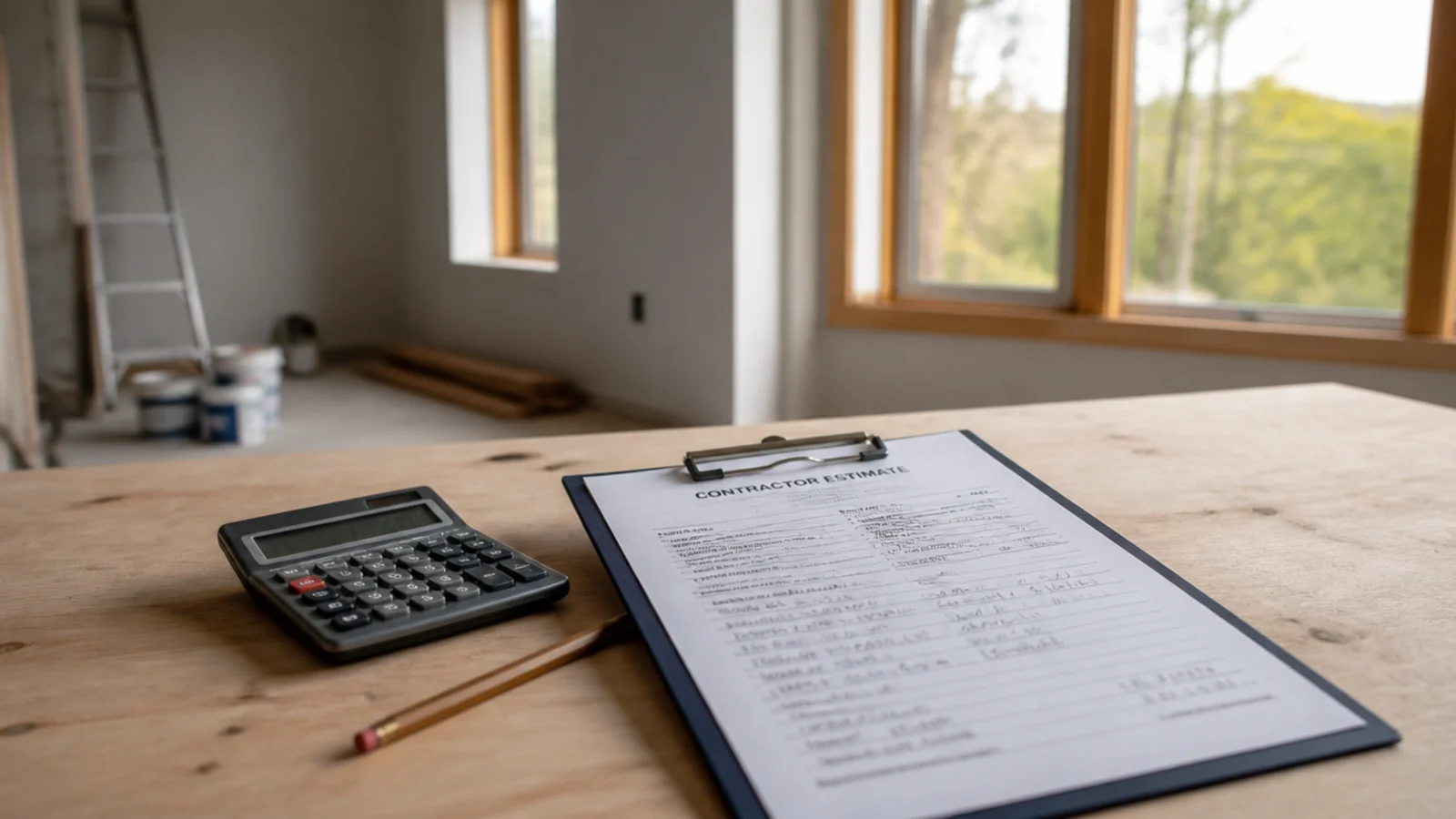
The steps, in order
The short version — each step is explained in full below.
- Get the total price
List price, sold price, project total, or material total — whichever applies. Use one consistent number for both sides of comparison.
- Get the square footage
Use the same standard on both sides. For homes, use livable/heated area (ANSI Z765). For materials, use the area being covered.
- Divide
Price per sq ft = Total Price ÷ Square Footage. Round to the nearest dollar for clarity.
- Compare like with like
Only compare within the same neighborhood, same property type, same finish level. The local benchmark is what matters, not a national average.
Quick answer
Price per square foot = Total Price ÷ Square Footage. A $450,000 home that's 1,800 sq ft is $250 per sq ft. A $4,000 flooring job covering 400 sq ft is $10 per sq ft. The unit lets you compare projects of different sizes apples-to-apples.
Formula: $ per sq ft = Total $ ÷ Total Sq Ft
What 'price per square foot' actually tells you
Price per square foot normalizes cost across spaces of different sizes. Without it, you can't really compare a $400,000 1,400 sq ft condo to a $550,000 2,200 sq ft house. With it, you can: the condo is $286/sq ft, the house is $250/sq ft.
That's the useful part. The misleading part: the metric doesn't account for what's actually in the price. A $250/sq ft house might be brand-new construction in a desirable area. A $250/sq ft house in a different market might be 70 years old and need a new roof. Same number, totally different value.
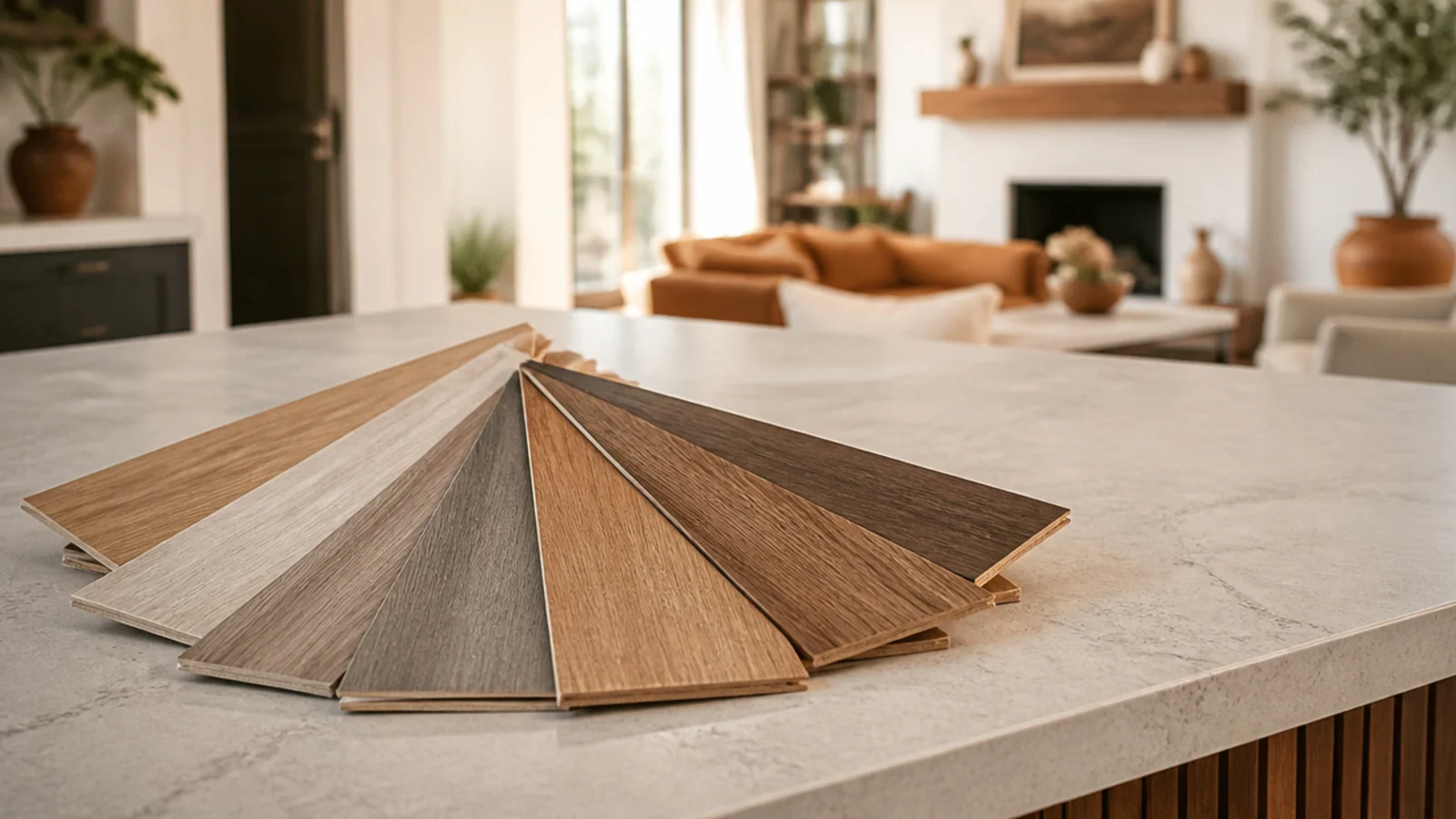
Real estate price per square foot
In real estate, price per square foot is used to compare listings and to estimate fair market value. Here's how to use it well:
- ·Compare within the same neighborhood. The local average is only meaningful within ~1 mile.
- ·Compare similar property types (condo to condo, single-family to single-family, not mixed).
- ·Use livable square footage (heated, finished space). Don't include garage, unfinished basement, or porches in the denominator.
- ·Newer is usually higher $/sq ft because of updated systems, code-current construction, and lower deferred maintenance.
- ·Smaller homes have HIGHER $/sq ft on average. A 1,000 sq ft house and a 2,500 sq ft house in the same area often cost similar absolute amounts, so the smaller one is more $/sq ft.
US median home price (2024) is around $200–$220 per sq ft, but ranges from $80 in rural areas to $1,000+ in San Francisco and Manhattan. The average is almost useless without geographic context.
Construction & renovation cost per sq ft
Building a new home in the US averages $150 to $300 per sq ft (2024 NAHB data) — but that's the median across regions and finish levels. Custom builds, urban areas, and high-end finishes can push past $500/sq ft.
Renovations are even more variable because the unit price depends heavily on which spaces you're touching. Kitchens and bathrooms cost much more per sq ft than bedrooms because they include cabinets, plumbing, electrical, and tile.
| Project type | Typical $/sq ft (US) | Notes |
|---|---|---|
| New home construction | $150–$300 | NAHB 2024; varies by region and finish |
| Custom home | $250–$500+ | Architect-designed, premium finishes |
| Kitchen remodel | $150–$400/sq ft | Includes cabinets, counters, appliances |
| Bathroom remodel | $200–$600/sq ft | Higher due to plumbing and tile density |
| Basic interior remodel | $30–$100/sq ft | Paint, flooring, no kitchen/bath |
| ADU / garage conversion | $200–$400/sq ft | Often more than equivalent new build |
| Tear-down and rebuild | $200–$350/sq ft | Demo + new construction |
Material price per sq ft
For materials, price per sq ft is much simpler — it's just the unit price. Multiply by your project area (plus waste factor) to get the line-item cost:
- ·Sheet vinyl flooring: $1–$4 per sq ft
- ·Laminate flooring: $2–$6 per sq ft
- ·Engineered hardwood: $4–$12 per sq ft
- ·Solid hardwood: $5–$15 per sq ft
- ·Ceramic tile: $2–$10 per sq ft
- ·Porcelain tile: $3–$15 per sq ft
- ·Natural stone tile: $5–$30+ per sq ft
- ·Carpet (mid-grade): $2–$5 per sq ft
- ·Vinyl siding: $2–$5 per sq ft
- ·Fiber cement siding: $4–$10 per sq ft
- ·Asphalt shingle roofing: $3–$5 per sq ft of roof
- ·Metal roofing: $7–$15 per sq ft of roof
These are material costs only. Installed cost runs roughly 1.5–3× material, depending on the trade. Always get installer quotes for actual project cost.
Rent per square foot
For rentals, price per square foot lets you compare units within or across cities:
- ·US average rent per sq ft (2024): about $2.00 — but ranges from $1 in rural areas to $5+ in San Francisco and Manhattan
- ·Commercial office rent is usually quoted as $/sq ft per year (e.g. $40/sq ft/year)
- ·Retail rent is also annual per sq ft, but can include percentage-of-sales rent on top
- ·Smaller apartments are higher $/sq ft than larger ones (same effect as for-sale real estate)
Common traps to avoid
Price per square foot is so commonly used that it's easy to misuse it. Watch for these:
- ·Different square footage definitions — make sure both sides use the same standard (ANSI Z765 for residential)
- ·Including unfinished space in the denominator (a $300k house at 2,000 sq ft is $150/sq ft, but if 600 sq ft is unfinished basement, real living-area cost is $214/sq ft)
- ·Comparing brand-new to old-with-deferred-maintenance
- ·Comparing properties that include vs exclude land value
- ·Mixing 'list price per sq ft' with 'sold price per sq ft' (sold is what matters)
- ·Forgetting closing costs, taxes, and insurance — these don't scale with square footage but show up in true cost of ownership
Median price per sq ft by US metro (2024)
Use this table as a sanity check against any listing. If a home in San Francisco is priced at $400/sq ft, that’s a screaming deal. If a home in Cleveland is priced at $400/sq ft, something is off — verify the square footage, the comps, and the condition. Median price per sq ft ranges roughly 12× across the US, which makes national averages almost useless without local context.
| Metro area | Median $/sq ft | Tier |
|---|---|---|
| San Francisco Bay Area, CA | $900–$1,200 | Highest |
| Manhattan, NY | $1,200–$1,800 | Highest |
| Honolulu, HI | $750–$900 | High |
| Los Angeles, CA | $650–$850 | High |
| San Diego, CA | $600–$750 | High |
| Boston, MA | $550–$700 | High |
| Seattle, WA | $500–$650 | High |
| Washington, DC | $450–$600 | High |
| Miami, FL | $400–$550 | Above avg |
| Denver, CO | $350–$450 | Above avg |
| Portland, OR | $300–$400 | Above avg |
| Austin, TX | $300–$400 | Above avg |
| Nashville, TN | $250–$325 | Average |
| Phoenix, AZ | $225–$300 | Average |
| Atlanta, GA | $200–$275 | Average |
| Dallas-Fort Worth, TX | $200–$275 | Average |
| Charlotte, NC | $175–$250 | Average |
| Chicago, IL | $175–$250 | Average |
| Houston, TX | $160–$220 | Below avg |
| Indianapolis, IN | $140–$185 | Below avg |
| Pittsburgh, PA | $130–$175 | Below avg |
| Memphis, TN | $110–$160 | Below avg |
| Cleveland, OH | $100–$145 | Lowest |
| Detroit, MI | $80–$130 | Lowest |
These are 2024 metro-level medians — single-family homes, finished and habitable, listed for sale. Specific neighborhoods within each metro can be 2–3× higher or lower. Always check your specific zip code on Zillow, Redfin, or Realtor.com for current data.

Construction cost tiers
When you’re building rather than buying, the price-per-sq-ft varies hugely by finish level. Here’s how to read a builder’s quote:
| Build tier | $/sq ft (US) | What that means |
|---|---|---|
| Modular / kit home | $80–$150 | Prefabricated, assembled on site, lower customization |
| Entry-level spec home | $130–$180 | Standard builder-grade finishes, simple layout |
| Production builder | $160–$220 | National builders, choice of plans, standard upgrades |
| Semi-custom | $220–$320 | Modified plans, mid-tier finishes, some custom work |
| Custom (mid-market) | $300–$450 | Architect-designed, custom millwork, granite/quartz |
| High-end custom | $450–$700 | Premium finishes, specialty trades, complex design |
| Luxury custom | $700–$1,500+ | One-off design, exotic materials, no compromises |
These exclude land cost, site preparation, and city fees, which can add $50,000 to $500,000 separately. Always ask a builder: “Does that number include land, permits, sewer/water hookups, landscaping, and the driveway?”
When NOT to use price per square foot
Price per sq ft is a useful first filter, but it breaks down in several situations:
- ·Tiny lots vs large lots. A 1,200 sq ft house on a 50,000 sq ft lot is priced for the land, not the house. The $/sq ft on the house is misleading.
- ·Waterfront, view, or corner lots. Land premium dominates, not building size.
- ·Historic or architecturally significant homes. The character commands a premium that doesn’t scale with sq ft.
- ·Mixed-use or commercial-zoned properties. The price reflects highest-and-best-use, not residential comps.
- ·New construction in a transitioning neighborhood. Builder might be pricing for projected future value, not current comps.
- ·Distressed sales (foreclosure, short sale). Below-market $/sq ft reflects motivated seller, not actual value.
- ·Tear-downs. The buyer is pricing the lot minus demolition cost, not the building.
When $/sq ft seems “off,” ask: is there land value, location value, or character value distorting it? A house that’s $50/sq ft below the neighborhood median almost always has a reason — figure out the reason before celebrating the price.
What price per square foot leaves out
The price-per-sq-ft figure is purely sticker price divided by area. It tells you nothing about the cost to actually live in the place. Here’s what gets left out — and how it changes the real numbers:
- ·Property taxes. Vary wildly by state and locality. New Jersey averages 2.21% of assessed value annually; Hawaii is 0.27%. A $500,000 home costs $11,000/year in NJ taxes vs $1,350 in Hawaii — that’s the equivalent of $20–$80 per sq ft per year on a 1,500 sq ft home.
- ·HOA fees. Condos and HOA-governed communities add $200–$1,500+ per month. A $400/month HOA on a 1,000 sq ft condo is $4.80/sq ft per year on top of the purchase price.
- ·Insurance. Homeowner’s insurance averages $1,800/year nationally but ranges from $700 in Hawaii to $4,000+ in Florida and Louisiana (hurricane / flood zones). Earthquake and flood insurance are separate.
- ·Closing costs. 2–5% of purchase price. On a $400,000 home, that’s $8,000–$20,000 — equivalent to $5–$13 extra per sq ft on a 1,500 sq ft purchase.
- ·Mortgage interest. At 7% over 30 years, you pay roughly the original purchase price again in interest. A $400,000 loan costs about $560,000 in interest over the life of the loan.
- ·Maintenance and repairs. Industry rule of thumb: 1% of home value per year. On a $500,000 home, that’s $5,000/year going to roof, HVAC, plumbing, paint, and unexpected repairs.
- ·Utilities. Heating, cooling, water, electricity. A large home in a cold or hot climate can run $400–$800/month — equivalent to $3–$7 per sq ft per year on top of everything else.
Real estate gurus call this the “true cost of homeownership.” A $200/sq ft house in a state with high taxes, expensive insurance, and high HOA fees can have a higher real monthly cost than a $250/sq ft house elsewhere. When shopping, always compute the full monthly cost (mortgage + tax + insurance + HOA + utility estimate) and compare those numbers — not just $/sq ft.
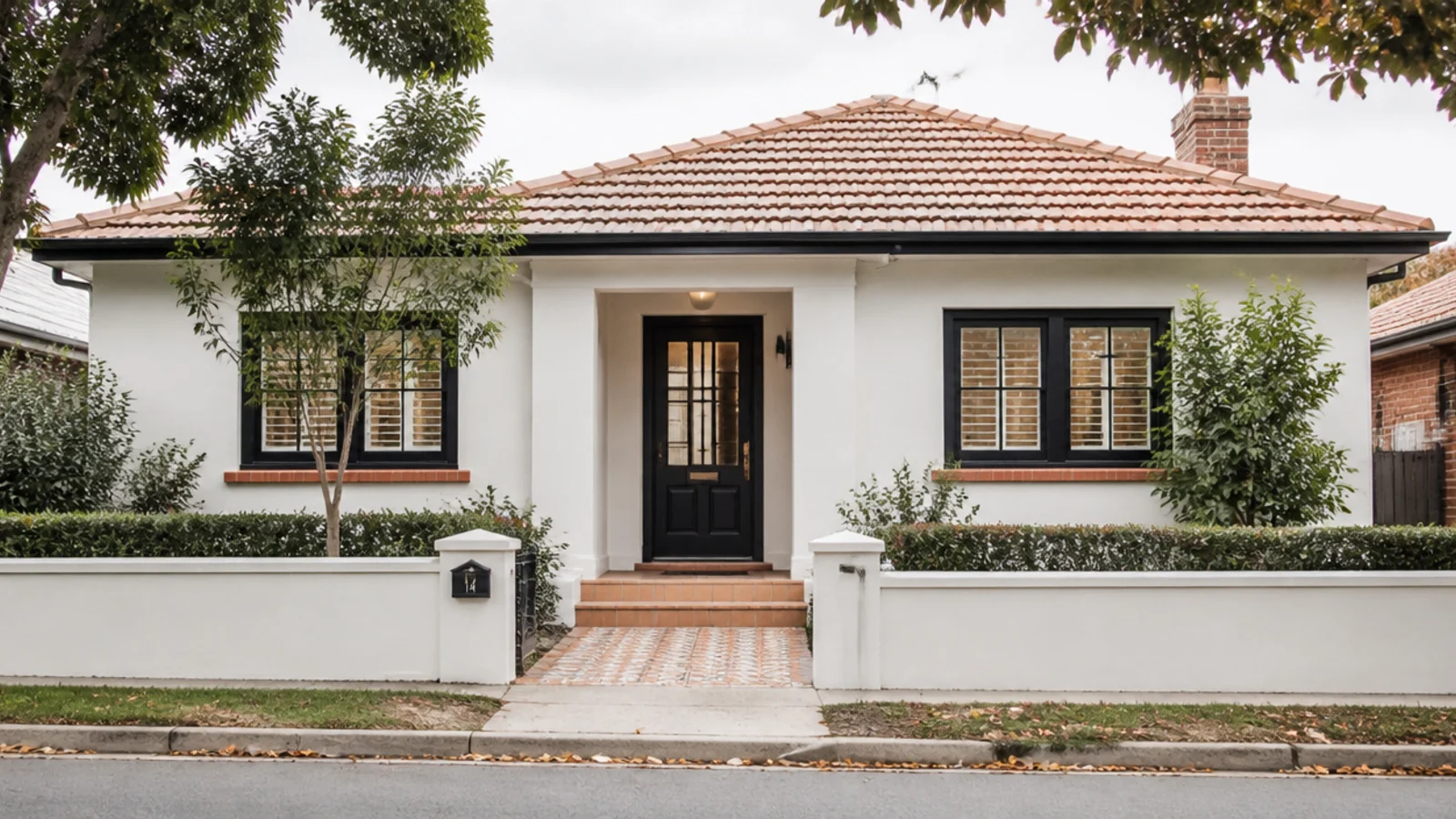
Gross vs livable square footage — the most common comparison error
When you see different $/sq ft numbers for the same home on different sites (Zillow, Redfin, MLS), it’s almost always because of which square footage was used as the denominator. There’s no single standard.
- ·Livable square footage (ANSI Z765). Heated, finished space measured to exterior walls. Excludes garage, unheated porch, unfinished basement. This is what the MLS officially uses in most US states.
- ·Gross building area. Includes all enclosed space, regardless of whether it’s finished or heated. Often used for new construction.
- ·Heated square footage. Specifically excludes unheated additions even if finished. Critical in cold-climate states.
- ·Above-grade square footage. Excludes basements entirely, even finished ones. Common in real estate appraisals.
- ·Total finished area. Includes finished basements added to above-grade space, but typically shown as a separate line item.
Always check which square footage figure the price uses. A 3,000 sq ft “total” home with a 1,000 sq ft finished basement is really 2,000 sq ft of above-grade livable space. The $/sq ft is hugely different depending on the denominator: $300,000 ÷ 3,000 = $100/sq ft, but $300,000 ÷ 2,000 = $150/sq ft. Same house, 50% difference in apparent value.
Material price and labour price are different numbers
Two quotes both stated “per square foot” can be four times apart and both be honest, because one is the material and the other is the material installed. Hardwood runs roughly $4–$15 per sq ft as a material and $11–$25 per sq ft installed. Before comparing two figures, establish which of the two each one is.
There is a second difference underneath that, and it is easy to miss: the two are usually charged on different areas. A material price applies to what you buy, which is the measured area plus waste. A labour or installed price is normally quoted on the measured area, because the installer is paid to cover the floor, not to pay for your offcuts.
Worked example, a 300 sq ft room in hardwood. Materials at $6 per sq ft are charged on 300 + 10% = 330 sq ft, so $1,980. Installed at $11–$25 per sq ft is charged on the 300 sq ft measured, so $3,300–$7,500 — and that installed figure already contains the material. Adding the two together double-counts the wood.
An installed price also varies by what it covers. Ask whether demolition, disposal of the old floor, subfloor preparation, transitions, trim and delivery sit inside the number or outside it. Those are the line items that turn a cheap rate into an expensive project, and they are why the lowest per-square-foot price is not reliably the cheapest job.
- ·Material only — what a supplier charges, applied to the purchase area (measured plus waste).
- ·Labour only — what an installer charges to fit it, normally on the measured area.
- ·Installed — material and labour in one rate. Does not usually include demolition, disposal, subfloor repair, trim or transitions.
- ·Turnkey — installed plus preparation and finishing. Rare as a per-square-foot quote; get it itemised.
Price per square foot is not a straight line at small sizes
Everything above treats price per square foot as a rate: multiply it by the area and you have the cost. That holds across the middle of the range and breaks at the bottom, which is why a quote for a small bathroom can look like the contractor has misread the drawing.
The reason is that a good part of any job does not scale with area at all. Travelling to the site, unloading, setting up, protecting the route in, cleaning down and disposing of the offcuts cost roughly the same whether the room is 40 sq ft or 400. Most trades price that reality as a minimum charge, and below the size where the rate covers it, the minimum is what you pay.
Worked example at $4.00 per square foot with a $500 minimum. The two meet at 125 sq ft. At 300 sq ft the job bills $1,200 and the effective rate is exactly the headline $4.00. At 50 sq ft the work is worth $200, the minimum charges $500, and the effective rate is $10.00 — two and a half times the number in the advertisement, for identical work.
This is worth knowing in both directions. It explains why a small job's quote is not evidence of being overcharged, and it explains why adding the hall to the bathroom often costs far less per square foot than the bathroom did alone. If you have two small areas to do, doing them in one visit is usually the single largest saving available.
It also means a headline rate collected from a large job cannot be applied to a small one. When comparing quotes, ask what the minimum is and where it stops applying, and compare total prices rather than rates for anything under a few hundred square feet.
| Job size | Amount billed | Effective rate | Which applies |
|---|---|---|---|
| 50 sq ft | $500 | $10.00 / sq ft | Minimum |
| 100 sq ft | $500 | $5.00 / sq ft | Minimum |
| 125 sq ft | $500 | $4.00 / sq ft | They meet |
| 200 sq ft | $800 | $4.00 / sq ft | Rate |
| 300 sq ft | $1,200 | $4.00 / sq ft | Rate |
| 500 sq ft | $2,000 | $4.00 / sq ft | Rate |
Calculators that use these techniques
Frequently asked questions
How do I calculate price per square foot?+
What is a good price per square foot for a house?+
Is a higher or lower price per square foot better?+
How do you calculate cost per square foot for flooring?+
Why do smaller homes cost more per square foot?+
What's a good price per square foot for new construction?+
Why is the price per square foot so much higher on a small job?+
Ready to calculate?
Calculate project cost