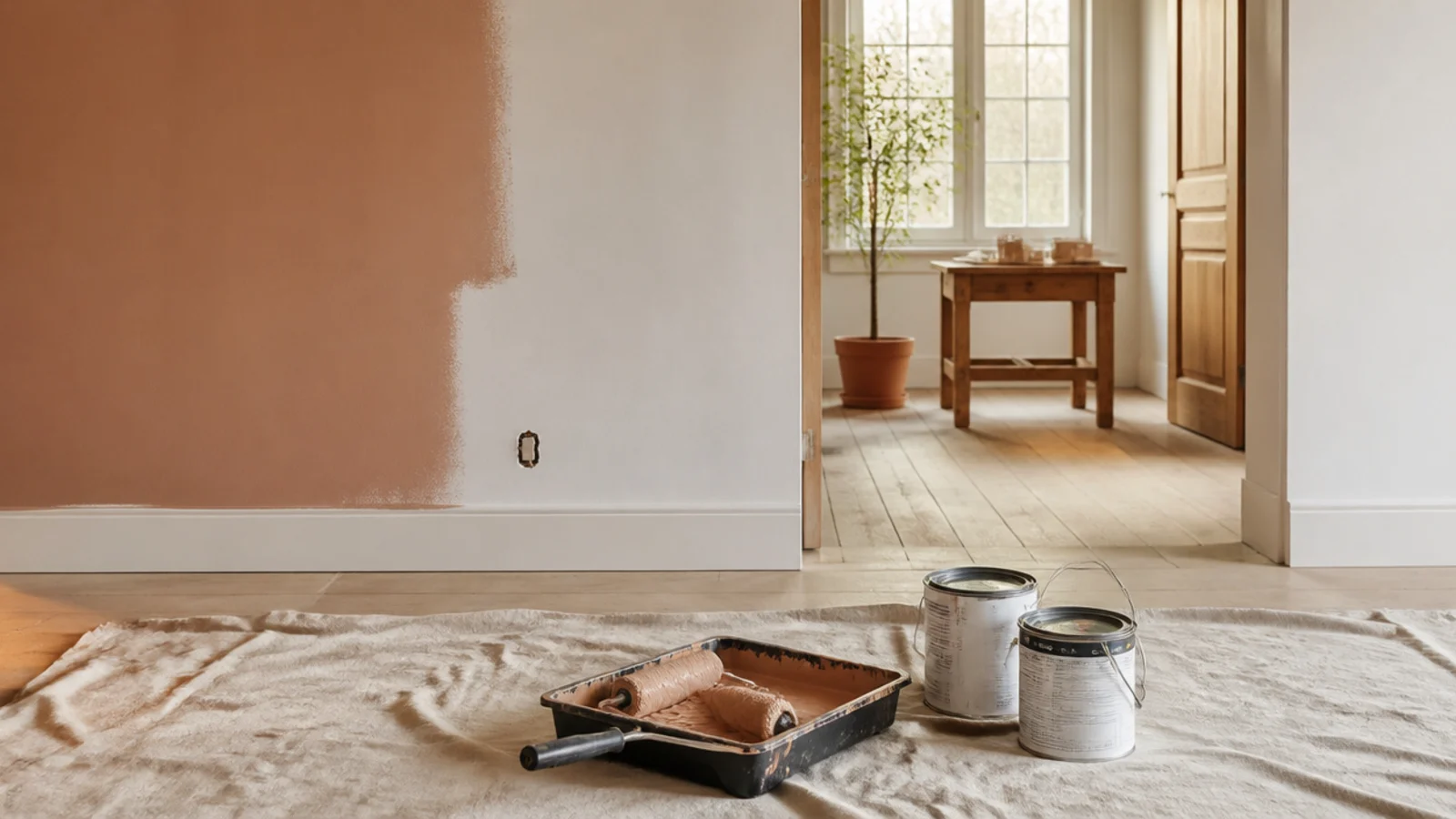
The steps, in order
The short version — each step is explained in full below.
- Measure room perimeter and height
Add the length of all walls to get perimeter. Measure the ceiling height. Multiply: perimeter × height = gross wall area.
- Subtract openings
Subtract 21 sq ft per door and 15 sq ft per average window. For very large windows, measure individually.
- Multiply by coats
Most rooms need 2 coats. Color changes or going dark to light may need 3.
- Divide by coverage rate
Divide total square footage to be painted by your paint's coverage rate per gallon (350 for smooth walls, 250 for textured, lower for porous surfaces).
- Round up and add buffer
Round up to whole gallons, then add 10–15% for touch-ups. Premium paints with higher coverage rates often work out cheaper per sq ft.
Quick answer
A standard gallon of interior latex paint covers approximately 350 square feet in one coat on smooth, primed drywall. Two coats cover 175 sq ft. Most rooms need two coats. The exact figure varies by paint brand, surface texture, and color change — but 350 sq ft per gallon per coat is the working number.
Formula: paint gallons = (wall area in sq ft × number of coats) ÷ 350.
Coverage by paint type
Different paint formulations behave differently. The 350 sq ft figure is for typical interior latex. Specialty paints can be lower:
- ·Interior latex (Sherwin-Williams, Benjamin Moore standard): 350–400 sq ft per gallon, one coat
- ·Exterior latex: 250–350 sq ft per gallon (more is absorbed by exterior surfaces)
- ·Primer / sealer: 200–350 sq ft per gallon
- ·Oil-based / alkyd: 350–400 sq ft per gallon (better hide, more coverage)
- ·Stain blocker / odor blocker: 250–350 sq ft (heavier-bodied)
- ·Textured / suede / sand finishes: 100–200 sq ft per gallon
- ·Chalk paint: 100–150 sq ft per gallon (very thin coats by design)
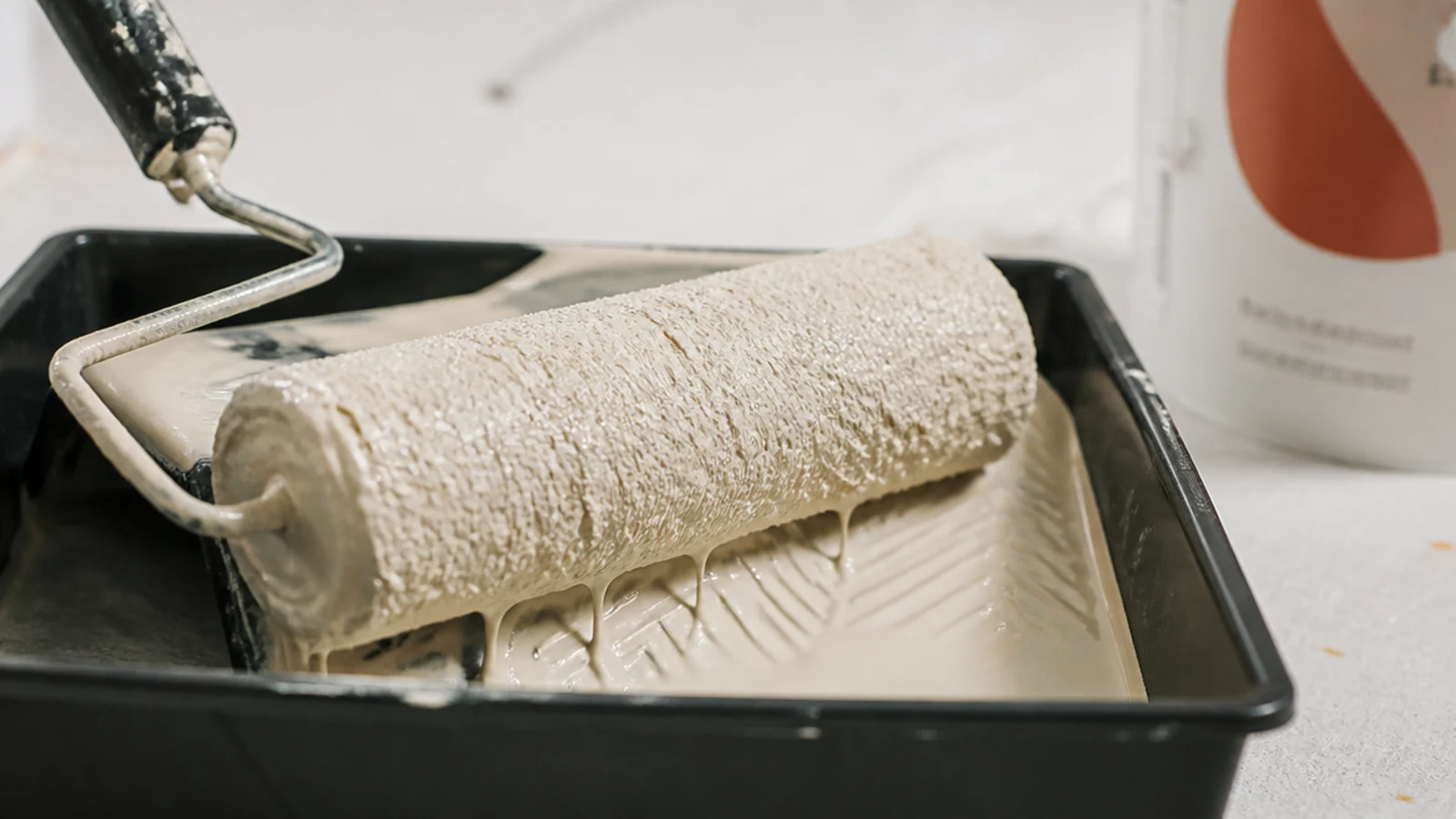
Coverage by surface
The same paint on a different surface covers very different square footage. Always reduce your estimate when the surface absorbs more paint:
| Surface | Coverage per gallon | Notes |
|---|---|---|
| Smooth drywall (primed) | 350 sq ft | The baseline figure most manufacturers cite |
| Smooth drywall (unprimed) | 250 sq ft | Absorbs first coat heavily; prime instead |
| Knockdown / orange peel texture | 275–325 sq ft | Texture adds 10–20% more surface area |
| Heavy texture / popcorn | 200–250 sq ft | Significantly reduces coverage |
| Plaster | 300 sq ft | Smooth plaster similar to drywall |
| Bare wood (unprimed) | 200 sq ft | Wood absorbs heavily; always prime |
| Primed wood | 350 sq ft | Back to baseline |
| Brick / masonry | 150–200 sq ft | Porous; needs masonry primer first |
| Stucco | 150–200 sq ft | Highly textured exterior |
| Metal (primed) | 350–400 sq ft | Smooth and non-absorbent |
The formula, step by step
To calculate how much paint you need:
- ·1. Measure the perimeter of the room (sum of all wall lengths).
- ·2. Multiply by ceiling height to get gross wall area.
- ·3. Subtract doors (~21 sq ft each) and windows (~15 sq ft each).
- ·4. Multiply by the number of coats (usually 2).
- ·5. Divide by the coverage rate for your paint/surface.
- ·6. Round up to whole gallons.
Example: 12 × 14 ft room, 8 ft ceilings, 1 door, 2 windows. Perimeter = 52 ft × 8 = 416 sq ft. Minus 21 + (2×15) = 51 sq ft. Net = 365 sq ft. Two coats = 730 sq ft. ÷ 350 = 2.09 gallons. Order 3 gallons (2 for two coats with margin, plus touch-up).
When you need more paint than coverage suggests
The 350 sq ft figure assumes ideal conditions. Order more when:
- ·Dark over light (or vice versa) — plan on 3 coats, not 2
- ·Color change (red over white, white over blue) — same: 3 coats
- ·Textured walls — reduce coverage estimate by 20%
- ·First time painting a porous surface (raw drywall, fresh plaster) — prime first OR add 30%
- ·Roller-only application — slightly higher consumption than spray
- ·Spraying — about 30% more paint due to overspray; check sprayer specs
Brand-specific coverage rates
Manufacturers publish coverage rates on the can label and product spec sheet. These reflect real-world expected coverage under typical conditions:
- ·Sherwin-Williams ProMar 200: 350–400 sq ft per gallon
- ·Benjamin Moore Regal Select: 400–450 sq ft per gallon (higher solids)
- ·Behr Premium Plus: 250–400 sq ft per gallon (varies by sheen)
- ·Valspar Signature: 300–400 sq ft per gallon
- ·PPG Diamond: 350–400 sq ft per gallon
Always check the can. Premium paints typically cover more square footage than budget paints because they have higher solids content. A more expensive gallon often works out cheaper per square foot.
Room-size cheat sheet (8 ft ceilings, two coats)
Skip the math. Find your room size below — the figure is for two coats of standard interior latex on smooth, primed walls, with a small allowance for windows and one door. Always round up; you can’t un-buy a gallon, but you can use leftovers for touch-ups.
| Room size | Wall area | Paint needed | Order |
|---|---|---|---|
| 8 × 10 ft (80 sq ft) | 288 sq ft | 1.6 gal | 2 gallons |
| 10 × 10 ft (100 sq ft) | 320 sq ft | 1.8 gal | 2 gallons |
| 10 × 12 ft (120 sq ft) | 352 sq ft | 2.0 gal | 2 gallons + quart |
| 12 × 12 ft (144 sq ft) | 384 sq ft | 2.2 gal | 3 gallons |
| 12 × 14 ft (168 sq ft) | 416 sq ft | 2.4 gal | 3 gallons |
| 12 × 16 ft (192 sq ft) | 448 sq ft | 2.6 gal | 3 gallons |
| 14 × 16 ft (224 sq ft) | 480 sq ft | 2.7 gal | 3 gallons |
| 15 × 15 ft (225 sq ft) | 480 sq ft | 2.7 gal | 3 gallons |
| 15 × 20 ft (300 sq ft) | 560 sq ft | 3.2 gal | 4 gallons |
| 16 × 20 ft (320 sq ft) | 576 sq ft | 3.3 gal | 4 gallons |
| 20 × 20 ft (400 sq ft) | 640 sq ft | 3.7 gal | 4 gallons |
| 20 × 24 ft (480 sq ft) | 704 sq ft | 4.0 gal | 4 gallons + quart |
Paint sheen matters
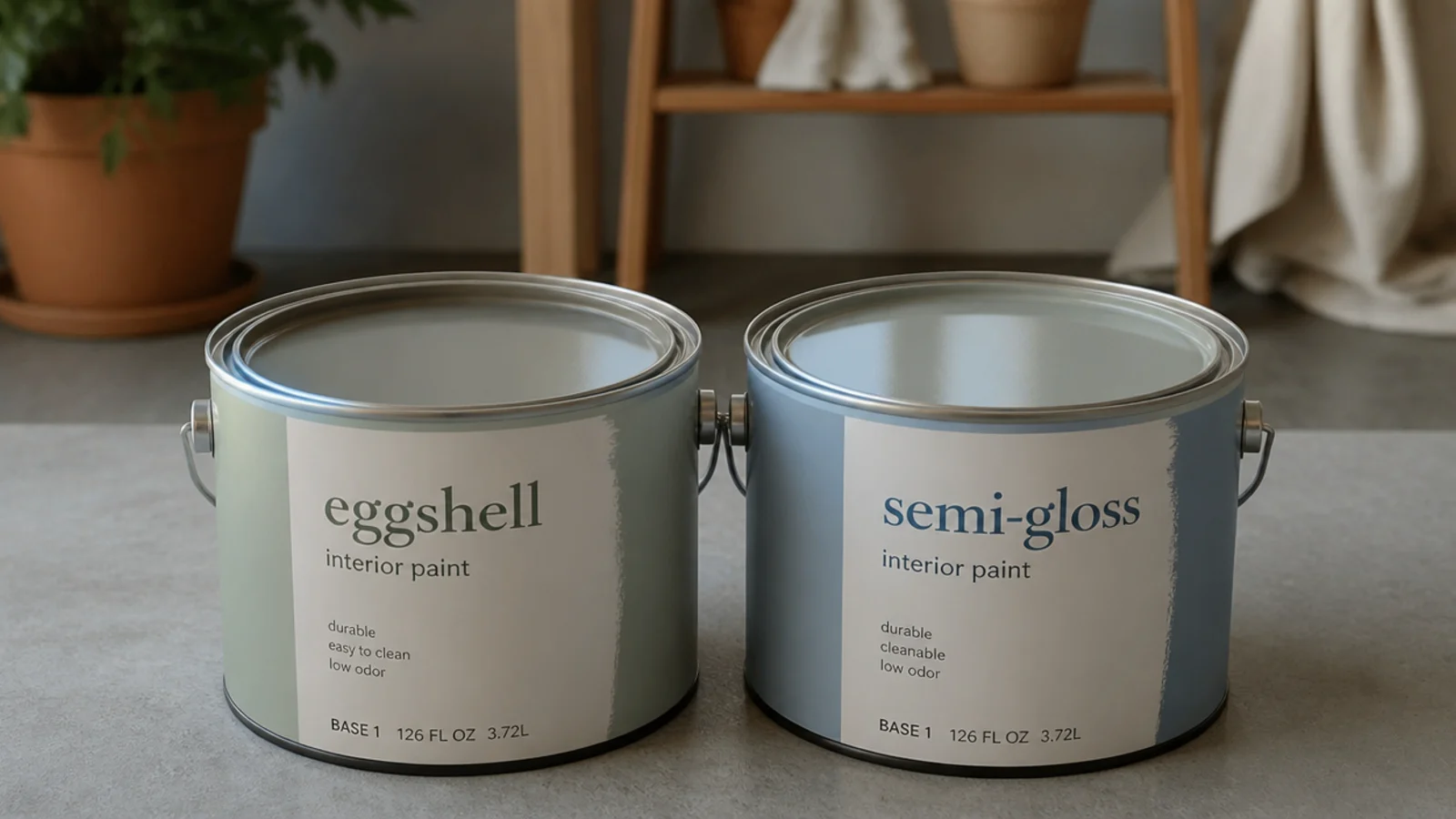
The same paint in different sheens covers slightly different square footage because of how the formula is balanced. Higher-sheen paints have more resin and less filler, which usually means slightly lower coverage per gallon but better hide:
- ·Flat / matte: 350–400 sq ft (highest coverage, hides drywall imperfections, hardest to clean)
- ·Eggshell: 325–375 sq ft (most popular interior choice, durable, washable)
- ·Satin: 300–350 sq ft (more washable, more glare, shows roller marks)
- ·Semi-gloss: 275–325 sq ft (kitchens, bathrooms, trim — must be applied carefully)
- ·Gloss / high-gloss: 250–325 sq ft (trim, doors, cabinets — shows every flaw)
If you’re mixing sheens on a project (eggshell walls, semi-gloss trim), calculate them separately. Trim usually needs about 10% of the total project area but uses different paint.
Primer: when you need it, how much
Primer isn’t optional in three cases: new drywall, dramatic color change (dark to light or vice versa), or painting over a stain-prone surface (water damage, smoke, glossy paint). Primer coverage runs 200–350 sq ft per gallon — typically less than topcoat because primers are formulated to seal and stick, not to give a finished color.
For a 12 × 14 ft room with 8 ft ceilings (about 416 sq ft of wall area), one coat of primer needs roughly 1.4 gallons. Round up to 2 gallons of primer, plus your normal 2 gallons of finish paint. Total: 4 gallons.
Self-priming “paint and primer in one” products work on most repaints but should NOT replace dedicated primer on new drywall, bare wood, or major color changes. The marketing claim “covers in one coat” assumes ideal conditions that rarely exist in real rooms.
Exterior paint is different
Exterior coverage runs lower than interior — typically 250–350 sq ft per gallon — because:
- ·Exterior surfaces are usually rougher (siding texture, stucco, brick)
- ·Exterior paint is thicker (more pigment to resist UV and weather)
- ·Sun, wind, and temperature affect application thickness
- ·Most exteriors need a primer coat first, especially over old paint
Rule of thumb for siding: measure the wall area (perimeter × height), don’t subtract for windows under 20 sq ft (the paint accommodates trim work around them), and order 25% more paint than the math suggests. Most professional exterior painters plan on 250 sq ft per gallon to be safe.
Spraying vs rolling
If you’re spraying, plan on 30–50% more paint than rolling for the same area. The overspray, the heavier mil thickness sprayers lay down, and the in-the-cup waste at the end of each session all add up. Professional sprayers minimize this with HVLP equipment, but DIY sprayers tend toward the high end of waste.
Rolling is the most efficient application — closest to manufacturer-quoted coverage rates. Brushing is in between, with more waste on the brush itself and dripping than rolling.
Painting cabinets, doors, and trim
Cabinets and trim are the tricky case because they have far more surface area per square foot of floor than walls do. The published coverage rate (350 sq ft per gallon) is for flat wall area — cabinets need a totally different estimate.
Calculate cabinet paint by adding up all the surfaces you’ll actually coat:
- ·Door fronts: width × height for each cabinet door. A 15“ × 30” door = 3.1 sq ft per side. Both sides for a typical job = 6.2 sq ft per door.
- ·Drawer fronts: typically smaller than doors. 15“ × 6” front = 0.625 sq ft per side.
- ·Cabinet frames (the exposed face frames around openings): about 6 sq ft per linear foot of cabinet run for both sides.
- ·Interior of doors (the back, paint-grade side): same area as the front.
Typical estimate: a 10-foot run of kitchen base cabinets has roughly 80 sq ft of total paintable surface (doors, drawer fronts, end panels, face frame) — about 4× what you’d guess from floor footprint alone. Plan on 2 quarts for a coat of primer plus 2 quarts of finish paint per coat for a typical 10-cabinet kitchen — total around 1.5 gallons for a full repaint with primer.
Trim and baseboard math
Trim is calculated by linear feet, not square feet, because trim has fixed widths.
- ·Baseboard (4–6 inches wide): about 0.5 sq ft of paint surface per linear foot
- ·Door casing (2–3 inches wide on each side, plus top): about 4 sq ft per door opening
- ·Crown molding (3–5 inches): 0.4 sq ft per linear foot
- ·Window casing: 3–4 sq ft per average window
- ·Door (both sides + edges): 40 sq ft per door for an average 30“ × 80” door
For a typical 12 × 14 ft room with one door, two windows, and baseboard around the perimeter: trim adds up to roughly 60–80 sq ft of separate paint surface. One quart of trim paint covers a full room. A full house often needs 2 gallons of trim paint, distinct from the wall paint order.
Calculators that use these techniques
Frequently asked questions
How many square feet does a gallon of paint cover?+
How many gallons of paint do I need for a 12x12 room?+
How many gallons of paint for 1000 square feet?+
How much does a quart of paint cover?+
Does primer count as a coat?+
Should I buy more paint than I think I need?+
Can one gallon cover an average bedroom?+
How much paint do I need for a ceiling?+
Does dark paint require more coats than light paint?+
How much paint do I need for kitchen cabinets?+
How much paint for the exterior of a house?+
How long does paint last in the can?+
Ready to calculate?
Open paint calculator